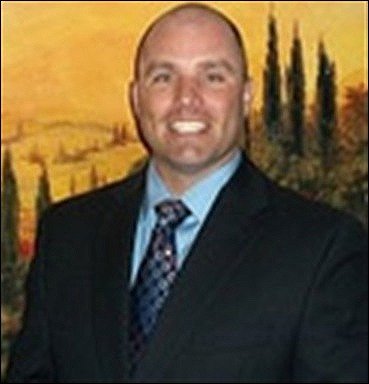
David J. Schwartz, Financial Advisor and founder of Champion Wealth Management

“We understand the importance of utilizing industry professionals to create and implement innovative wealth management strategies to deliver exceptional care and attention to our clients’ needs.”

Meet David

David J. Schwartz

Financial Advisor

Office: (662) 253-8406  |  Fax: (662) 253-8630

davidj.schwartz@lpl.com

When David started his career in the financial industry in 2005, he never forgot his humble beginnings that forged his strong work ethic and character. He ran a paper route at age 12, worked in a steel foundry at age 17, served his country honorably for eight years in the United States Air Force, worked his way through college as a dealer in the casinos and earned a Bachelor of Science in Business Administration from Christian Brothers University. Many of the people he met along the way struggled financially. This was the motivational factor that created a strong desire to make a definable difference in each and every client’s financial life. He had a passionate drive to help people attain their financial goals, and by using a little common sense, help them to live the lifestyle they’ve dreamed of.

In 2005, David became a financial advisor at Edward Jones. During his time there, he came to understand the importance of acting as his clients’ advocate and consistently exceeded their expectations. He also realized that, by not being able to offer independent investment holdings, he was not doing all he could for them. In 2011, he became the founding member of Champion Wealth Management, offering securities through LPL Financial, the nation’s largest independent broker/dealer.*

David is a financial professional and holds his Series 7 and 63 registrations through LPL Financial and his Series 66 through both LPL Financial and Independent Advisor Alliance and a Life & Health insurance license. These registrations allow David to offer securities through LPL Financial, advisory services through Independent Advisor Alliance, and insurance products as a licensed agent, while providing comprehensive financial guidance.

In his free time, David enjoys spending time with his son Donovan, riding his Indian Scout 101 motorcycle, shooting a few games of pool with clients, building cool stuff with Claude AI, finding a good camping spot, and getting in a little fishing.

*LPL Financial is the nation’s largest independent broker-dealer as reported by Financial Planning magazine, 1996–2025, based on total revenue.

Before You Hire Anyone

Choosing a Financial Advisor: Common Questions

Straight answers to common questions about choosing a financial advisor, drawn from the SEC, FINRA, and state securities regulators.

How do I check a financial advisor's background?

Start by confirming the person is registered. FINRA BrokerCheck shows the registration, licensing, and disciplinary history of brokers and their firms, and the SEC's Investment Adviser Public Disclosure website covers investment advisers. The SEC calls registration the most important question to consider before hiring an investment professional.

Do professional designations mean an advisor is better?

Not necessarily. The SEC cautions investors not to assume that initials after someone's name make that person more qualified than another, because these titles are not all the same and do not necessarily mean better service. FINRA notes that some designations involve rigorous standards, while others are relatively easy to earn, and that a designation should never be the sole reason you choose an investment professional.

What licenses do financial advisors hold?

Common securities licenses include the Series 7, which allows a broader range of securities to be sold than more limited licenses; the Series 63, the state law exam for broker-dealer representatives; and the Series 65, for investment adviser representatives. The Series 66 counts as passing both the Series 63 and Series 65, but registering as an investment adviser representative based on the Series 66 also requires the Series 7. Insurance products require a separate state insurance license. BrokerCheck shows which registrations a person holds.

What questions should I ask before hiring an advisor?

The SEC suggests considering what services and products you need and which ones the advisor can provide, any limits on what they can offer, how much you will pay and how the advisor gets paid, what conflicts of interest they may have, and whether they have any legal or disciplinary history. You can also use the conversation starters in the firm's relationship summary, known as Form CRS.

What is Form CRS?

Form CRS, or the relationship summary, is a short document that brokers and investment advisers must give retail investors. It explains the types of services the firm offers, the fees and costs, conflicts of interest, the required standard of conduct, whether the firm and its professionals have reportable legal or disciplinary history, and key questions to ask. The Form CRS for LPL Financial and for Independent Advisor Alliance are linked at the bottom of every page of this site.

How are financial advisors paid?

It depends on the type of account. According to the SEC, brokers typically charge a commission or markup each time you buy or sell an investment, while investment advisers typically charge a fee based on the value of the assets in your account, and other fees and costs may also apply. The SEC encourages you to ask how and how much your advisor is paid, and if a fee is quoted as a percentage, what that means in dollars.

Who actually picks the investments in my portfolio?

Often, more than one professional is involved. Many portfolios hold mutual funds, which are managed by investment advisers registered with the SEC who choose the fund's holdings. A financial advisor typically recommends investments that fit your goals, then monitors how they perform and whether they still align with your objectives.

Can an advisor guarantee my returns?

No. Investments such as mutual funds are not guaranteed or insured by the FDIC or any other government agency, and you may lose some or all of the money you invest. Past performance does not predict future returns, so be cautious of anyone who promises results.

Sources: SEC: Working with an Investment Professional, SEC: Brokers, SEC: Investment Advisers, SEC: Mutual Funds, FINRA: 3 Things to Know About Financial Designations, FINRA: Registered Financial Professionals, NASAA: Exams, FINRA BrokerCheck, and SEC Investment Adviser Public Disclosure.

This information is general education drawn from securities regulators. It is not a recommendation of any investment professional or investment, and no investment strategy can guarantee results or protect against loss.